Tesla Resets Optimus Humanoid Robot Delivery Timeline to Late 2027
Elon Musk cites persistent hardware and AI challenges as Tesla delays external robot shipments, placing the company on a similar schedule to rivals like XPeng and Boston Dynamics.
By Nadia Singh ·
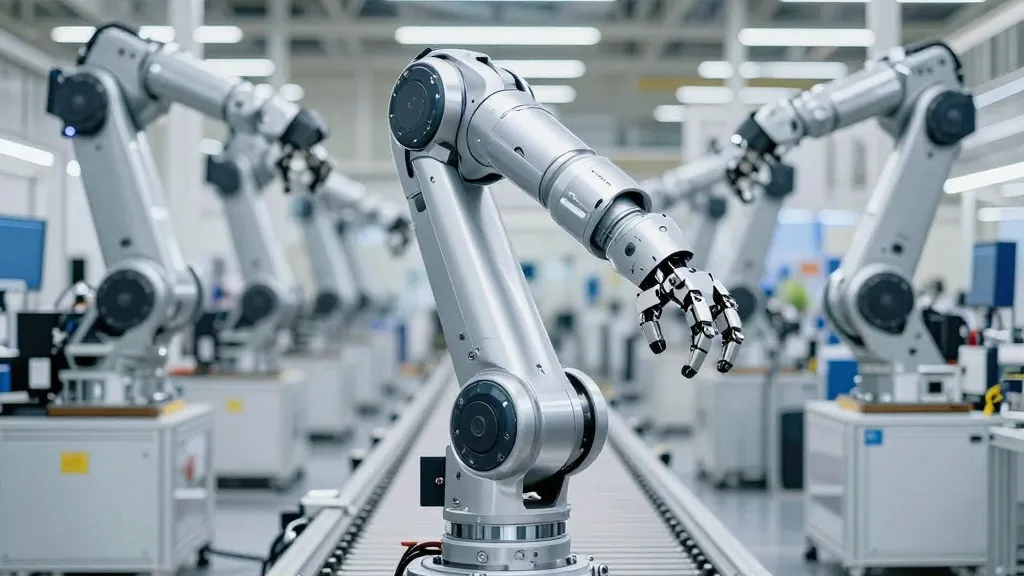
Tesla has officially pushed the start date for external deliveries of its Optimus humanoid robot to the end of 2027. During the company's third quarter 2026 earnings call, Chief Executive Officer Elon Musk explained that the robot's hands, overall durability, and artificial intelligence systems still require significant development before they can be sold to outside customers. This update confirms a continued shift in the company's ambitious production schedule for its most anticipated non-automotive product.
The primary obstacles identified by Musk align with the broader challenges facing the entire humanoid robotics industry. He stated that Tesla is currently in early production of Optimus units on a high-volume line in Fremont, California, the same facility that previously manufactured the Model S and Model X. While the infrastructure is largely installed to support a potential output of one million robots per year, Musk acknowledged that reaching a weekly production rate of approximately 20,000 units will take at least another year, possibly longer, due to ongoing design adjustments.
Specific hardware components remain the most difficult areas to finalize. A Tesla engineer identified the robot's hand as a critical challenge, noting that it involves complex electromechanical designs and custom gears with reliability concerns. Musk agreed, explaining that the fingers must be soft enough to handle delicate items yet durable enough to withstand constant wear. Unlike human skin, robot components cannot heal, making the hand a major bottleneck in achieving production quality.
On the software side, Tesla faces distinct hurdles because it lacks a fleet of robots collecting real-world data in the same way its vehicles do for its Full Self-Driving program. To address this, the company plans to build between 10,000 and 20,000 robots to practice tasks in a dedicated facility known as the Optimus Academy. Tesla also intends to integrate its AI5 chip into the Optimus platform around April 2027. Musk promised a video demonstration within the next one to two months showing the robot performing unscripted tasks, aiming to dispel the notion that current humanoid demos are merely pre-programmed routines.
This latest timeline follows a pattern of delays that have characterized the Optimus project since its inception. In 2024, Musk predicted internal use in 2025 and high-volume external production in 2026. By January 2025, he suggested that 10,000 robots would be built that year, with several thousand performing useful work. However, the company later admitted that none of the units had reached that level of utility. The third quarter shareholder letter now describes the robots coming off the Fremont line as the first production-quality units, implying that previous iterations were not ready for widespread deployment.
Competitors are advancing in parallel, challenging Musk's assertion that no one else is close to Tesla's capabilities. XPeng activated an automated production line for its IRON robot in Guangzhou in September, with over 80% of core processes automated. The company plans mass production by the end of 2026 and deliveries in the first half of 2027, a timeline nearly identical to Tesla's. Meanwhile, Boston Dynamics began producing its electric Atlas robot in January and has committed all its 2026 deployments to customers, including Google DeepMind. Hyundai, which owns Boston Dynamics, is also establishing a robot training center in Georgia to integrate Atlas into its assembly lines.
The competitive landscape reveals that while Tesla may be building the most units, it is not alone in solving the problem of generalization. Boston Dynamics has adopted a more pragmatic approach to the hand issue, prioritizing sturdy grippers for industrial parts over human-like dexterity. This strategy allows the robot to perform specific tasks reliably, even if it lacks the versatility of a fully dexterous hand. XPeng and Boston Dynamics are both dealing with the same reality that no humanoid robot has yet shipped to a paying customer on a large scale, and timelines across the industry continue to slip.
The delay to late 2027 highlights the gap between building a robot and making it useful. While Tesla has the advantage of its manufacturing expertise, the core difficulties of AI generalization and hardware reliability remain unsolved for all major players. The upcoming video demonstration will be a crucial test of whether Tesla's Optimus can move beyond scripted performances. Until then, the market must wait to see if the late 2027 target holds firm or if the timeline shifts once again.