NHTSA Moves to Standardize Cyan Lighting for Autonomous Vehicles
The National Highway Traffic Safety Administration proposes a uniform blue-green signal to indicate when driverless cars are operating, aiming to create a consistent national standard for robotaxi operators and automakers.
By Jessica Abebe ·
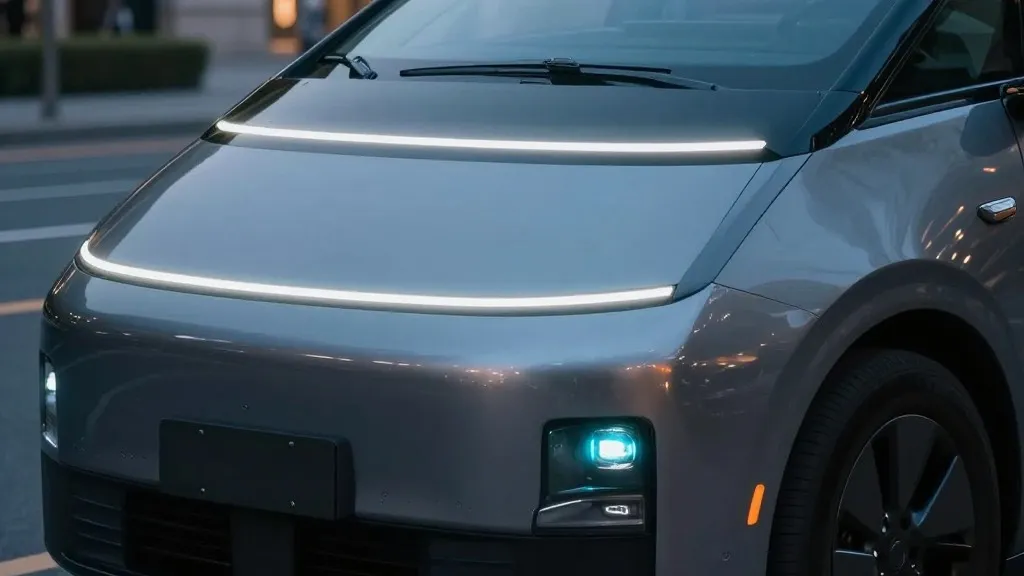
The National Highway Traffic Safety Administration (NHTSA) has issued a proposal to establish a uniform visual signal for vehicles operating without a human driver. The agency recommends that autonomous vehicles utilize distinct cyan-colored marker lamps to communicate their automated status to law enforcement and other road users. This move aims to resolve years of debate regarding how driverless cars should visually distinguish themselves from traditionally operated vehicles, offering a single, standardized solution to a complex regulatory question.
The proposal involves specific revisions to Federal Motor Vehicle Safety Standard (FMVSS) No. 108, which governs lighting equipment. By rewriting these rules, NHTSA intends to align federal regulations with the realities of autonomous technology. The initiative serves a dual purpose: it streamlines regulatory requirements for human-free vehicle designs while simultaneously standardizing the communication methods used by robotaxis and other automated driving systems.
The choice of cyan is driven by the need to fill a visual gap in current automotive lighting protocols. The industry already utilizes red, amber, white, and flashing blue or red lights for standard functions such as brake indicators, turn signals, headlights, and emergency vehicle alerts. NHTSA argues that a blue-green hue can clearly signal that an automated driving system is in control without causing confusion among drivers who are accustomed to existing color codes.
While this is a new federal proposal, there is existing precedent for non-standard lighting in autonomous contexts. Mercedes-Benz previously received state-level approval to use turquoise lights on its Level 3 Drive Pilot vehicles. Although the automaker has since shifted its strategy toward a Level 2++ system and scrapped the specific light implementation, the episode demonstrates the industry's interest in distinct visual markers. NHTSA seeks to create a national framework that companies like Waymo, Nuro, Zoox, GM, and Mercedes can adopt uniformly.
Under the proposed rule, the installation of cyan marker lights would remain optional for manufacturers. However, by defining official federal standards for the color, brightness, and physical location of these lights, the agency aims to prevent a fragmented market. This standardization ensures that any automaker choosing to implement the feature uses a consistent and legally compliant setup, rather than a varied mix of proprietary colors and signals that could confuse other road users.
The proposal also addresses legacy requirements that are increasingly obsolete for vehicles without human operators. NHTSA suggests removing mandates for physical interior controls, such as hazard switches, manual beam shifters, and turn levers, which are unnecessary in a fully autonomous context. Additionally, the agency proposes updating the 12.8-volt testing standard to accommodate modern LED architectures, reducing administrative barriers for manufacturers.
The agency is also considering eliminating specific requirements regarding the vertical placement of high-beam lights relative to low-beam lights. These changes are part of a broader Department of Transportation initiative to streamline the deployment of autonomous vehicles. The goal is to facilitate the creation of cars that lack traditional human-driven controls, such as steering wheels and pedals, by aligning safety standards with the vehicle's actual operational capabilities.
Despite these efforts to modernize regulations, regulators continue to enforce existing rules strictly while new standards are being developed. In a recent development, NHTSA opened an audit query into the Tesla Cybercab. The investigation examines the technical data and certification processes Tesla relied upon, specifically focusing on the vehicle's lack of sideview mirrors, pedals, and a steering wheel. These features are currently mandated under FMVSS, highlighting the tension between emerging autonomous designs and established regulatory frameworks.
The path forward involves balancing the push for streamlined, modern regulations with the rigorous application of current safety standards. By proposing a clear visual language for autonomous vehicles and removing obsolete control requirements, NHTSA aims to create a more cohesive regulatory environment. This approach seeks to accelerate the integration of driverless technology into the national transportation network while maintaining consistency and safety for all road users.
More Business · Business Watchdog · Report a business · Got a Story?