
Attackers Can Impersonate Any Website Using Flawed Certificates
Attackers can now pretend to be any website or software provider due to a widespread certificate issue.
By Julia Novak ·
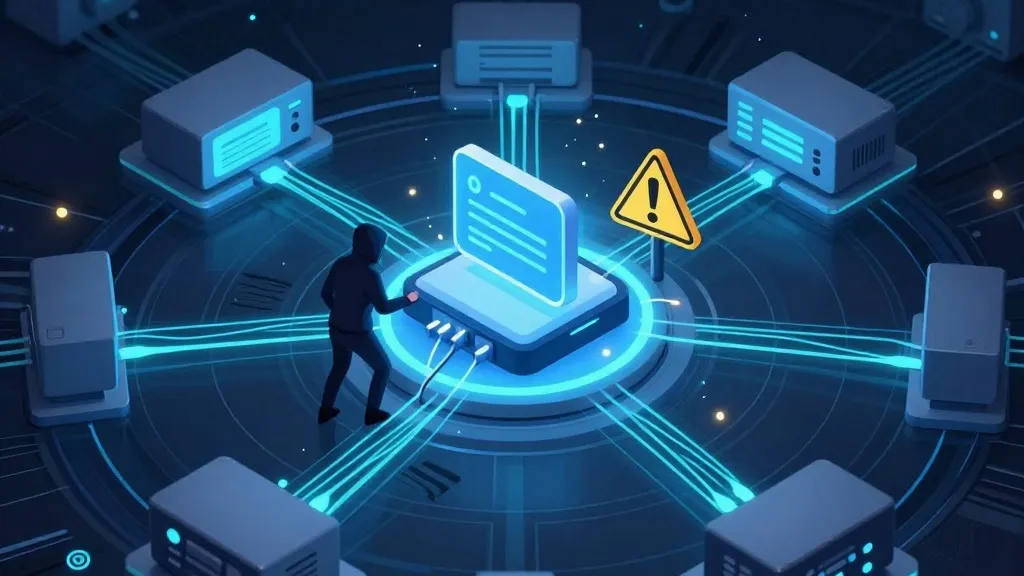
Attackers can now pretend to be any website or software provider due to a widespread certificate issue. This means that any attacker in the path of your network traffic, like in a company network or public Wi-Fi, can intercept your connection and pretend to be a trusted website. Your operating system and installed software would not be able to tell the difference, and a downloaded application could appear to be from a legitimate source like Microsoft or Google.
The way software checks a certificate is by verifying its 'chain.' A website has a certificate issued by an intermediate Certification Authority (CA), and that certificate is trusted and signed by root certificates. The root certificates are kept offline in safes. This week, an Indian CA firm issued six TLS and two code-signing intermediate certificates with easily guessable keys, which compromised this system.
Your operating system and many applications keep a list of trusted root certificates and CAs, and browsers keep a list of those not to trust, called a revocation list. These lists need to be updated, and the eight affected CAs need to be revoked, the affected root certificate removed, or the affected keys rejected in the software.
There is a silver lining: recent versions of Chrome, Brave, Firefox, and Safari use a feature called Certificate Transparency that checks a public log of certificate issuances and blocks any that are not listed. Google reports that no certificates signed by the affected intermediate CAs were logged, so if you only used the web, you are likely safe. Still, you should check all your software for updates.
The problem is the sheer number of machines and software that need updating: PCs, servers, operating systems, phones, tablets, routers, web browsers, virtual servers, virtual machines, Docker and other containers, programming languages like Python, Go, Node.js, Rust, and standalone download utilities like curl. Old routers, smart and IoT appliances, and old computers could eventually present a problem.
The private key is the secret half of the two parts of a certificate, and for some reason, those of the aforementioned certs were only 1 byte long, thus a number from 0 to 255, trivial to brute-force in a split second. How this happened is still under investigation.
The sheer number of devices and software affected by this issue means that billions of older devices and software installations may be vulnerable. Patching all of them is a major task for systems administrators worldwide.
This issue has already required systems administrators to update software following a critical PHP RCE vulnerability, and now they have to update untold amounts of machines and software. This is a major challenge for organizations and individuals alike.