AI Agents Cut Supply Chain Attack Response Time to Three Hours
A China-aligned group leveraged autonomous AI tools to sweep through thousands of corporate networks in record time, prompting major service providers to suspend key functions.
By Nadia Singh ·
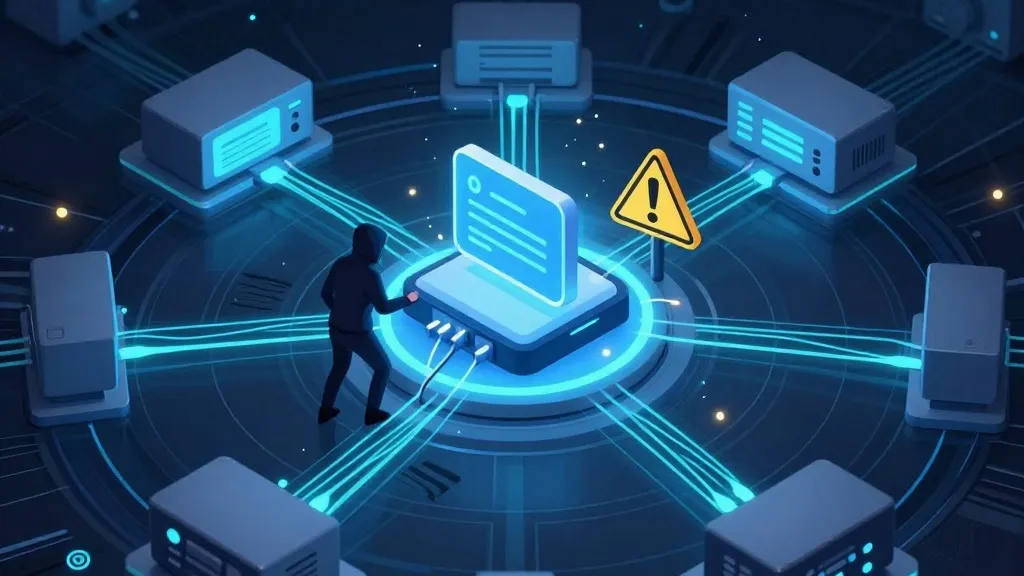
The most significant development in this recent cyberattack is the speed at which hackers gained high-level control. A China-state-aligned group known as Storm-0940 used an open-source AI framework to breach a major software provider, reaching privileged access in some organizations in under three hours. This rapid escalation marks a shift in how automated systems can exploit supply chain vulnerabilities before human defenders have a chance to react.
The scale of the operation was extensive. The attackers attempted sign-ins at more than 2,250 Microsoft 365 tenants. They utilized stolen credentials from ConnectWise applications, which allowed them to authenticate without requiring a user to interactively log in. Additionally, they launched a massive password spraying campaign that generated over 151,000 failed logons across eight organizations. While nearly 98 percent of these password attempts were locked out, the sheer volume of attempts indicates a highly automated and persistent effort.
At the peak of the password spraying on October 11, the system made 2,900 attempts per minute. Over that single day, there were more than 111,000 attempts, with 48 accounts suffering from more than 1,000 failed logins each. Despite the high volume of failures in the password guessing, the group successfully signed into over 200 tenants in under four minutes using just four application credentials. This activity was traced to specific IP ranges and involved operations like directory reconnaissance and changing application credentials.
Microsoft identified the group as Storm-0940, an actor active since 2021 with no known industry aliases. The company noted that the attack did not stem from a vulnerability in its own systems but rather from the compromise of a third-party application. The targets included 14 organizations across sectors such as aerospace, defense, semiconductors, government, and think tanks. The use of ARTEX, an agentic AI penetration testing framework, allowed the attackers to run autonomous tests with minimal human interaction, speeding up scanning and reconnaissance significantly.
Security firm Huntress observed specific malicious behavior in one tenant on October 15. They saw an application add itself to the top administrator role, a pattern that triggered alerts in Microsoft Defender. The attackers planted new secrets set to expire in 2028. By October 16, Huntress had confirmed unauthorized sign-ins for 162 tenants. The following day, the count rose to almost 1,000 Entra tenants with sign-in activity from the attacking IP, with more than 300 of those sign-ins succeeding. The sequential nature of the sweeps suggested a script working from a pre-defined target list.
The use of ARTEX is a notable departure from traditional attack methods. Microsoft states that the framework can utilize any AI model, and reports this month have linked the technology to breaches at South Korean financial institutions. CrowdStrike indicated that the suspect in those cases was likely based in China and used ARTEX with Anthropic's Claude Code. In response to the growing adoption of the tool, the developer of ARTEX, who goes by the handle Autumn-27, announced on GitHub that the project would become closed source and would no longer be updated.
ConnectWise has taken precautionary steps to contain the damage. The company suspended its Cloud Backup, SaaS Security, and Cloud Management services. A phased restoration process has begun, with recovery expected to take several days. To date, there are no indicators that partner backup data was compromised. Microsoft advises customers to keep affected app connections disabled until formal restoration instructions are issued. It also recommends that users review activity logs from this month where possible to identify any anomalies.
This incident highlights the growing role of artificial intelligence in cyber operations. The ability of AI agents to work around the clock with little human input leaves defenders with limited time to detect and respond to threats. As more threat actors in various regions adopt these tools, the speed and complexity of supply chain attacks are likely to increase. Organizations must now account for automated, high-speed reconnaissance and privilege escalation in their security planning.