Clocks Fall Back As Congress Debates Ending Time Shifts
Daylight saving time ends Sunday under federal law, while a bill to make it permanent sits stalled in the Senate.
By Nadia Singh ·
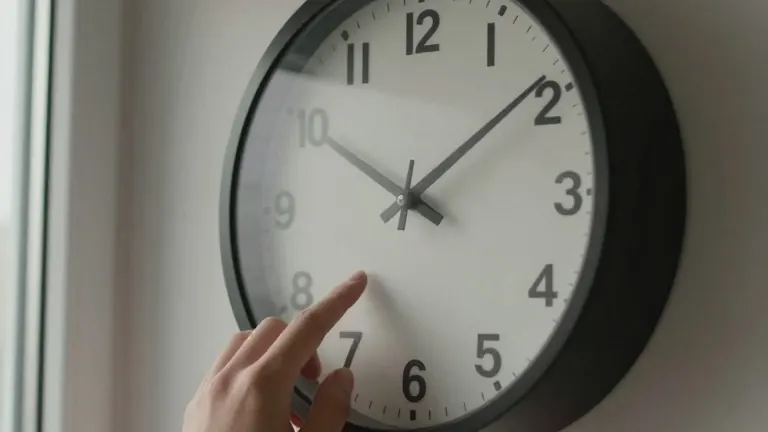
Southern California clocks will move back one hour at 2 a.m. Sunday, returning the state to Pacific Standard Time after a change mandated by federal law. The twice-yearly shift has become a point of dispute in Washington, where lawmakers disagree over whether to keep the schedule or make daylight saving time permanent.
Federal law sets the end of daylight saving time for the first Sunday in November. Connected devices including phones and computers will adjust on their own, while wall clocks, watches and some vehicle displays need manual resets. Sunday's sunrise is set for about 6:13 a.m., with sunset near 5 p.m., bringing darker mornings and earlier evenings.
The National Highway Traffic Safety Administration told drivers to slow down and watch for pedestrians near schools and bus stops as afternoon darkness returns. Fire departments recommend testing smoke alarms and carbon monoxide detectors and reviewing a home fire escape plan during the transition.
California voters passed Proposition 7 in 2018, which lets the Legislature change the state's daylight saving schedule with a two-thirds vote, provided federal law permits it. Current federal rules allow the state to adopt standard time year-round but not to keep daylight saving time permanently unless Congress acts.
The House passed the Sunshine Protection Act 308-117 on July 14. The bill would end the spring and fall clock changes in states that observe them. It went to the Senate Committee on Commerce, Science and Transportation, where it has stalled. A related measure, S. 29, won a 16-12 committee vote in April 2025, but the panel said another vote was needed to meet in-person attendance rules. Neither bill has reached the Senate floor.
President Donald Trump urged senators to move. "The United States Senate is letting the Daylight Saving Bill die, when a vast Majority of the Country want it," he wrote Monday on Truth Social. His position has changed over time: he called for ending daylight saving time in December 2024, called the question "50-50" in March 2025, and later backed permanent daylight saving.
Several senators object that permanent daylight saving would leave children and commuters in northern states traveling before sunrise in winter. The country ran a permanent daylight saving schedule in 1974 during an energy crisis; Congress ended it early after support dropped over worries about students walking to class in the dark. Hawaii, most of Arizona and several U.S. territories do not change clocks.
Absent a change in federal law, daylight saving time resumes at 2 a.m. March 14, 2027.