NASA hints at 22 rocket launches needed for next Moon landing
New internal estimates suggest SpaceX must fly far more tanker missions than previously thought to fuel the lunar lander for the Artemis program.
By Julia Novak ·
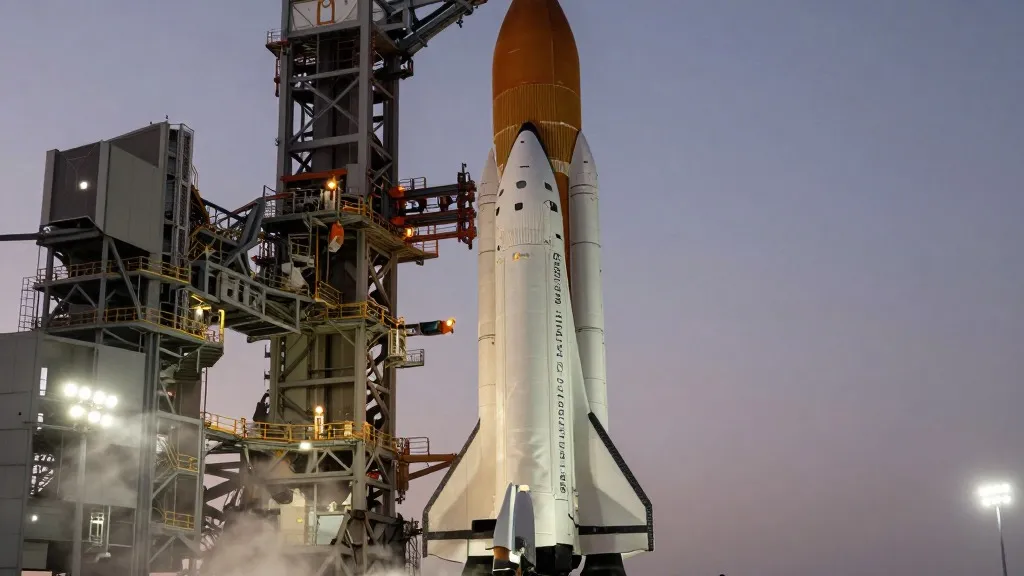
NASA has finally offered a clearer picture of the logistical burden required to send astronauts back to the Moon, revealing that as many as 22 Starship launches may be necessary to support a single crewed landing. This figure emerged during a recent safety review, marking a significant shift from the agency's previous reluctance to share specific numbers. The estimate reflects the massive amount of fuel needed to propel a Starship-based lander from low-Earth orbit to the lunar surface and back to lunar orbit.
For years, the number of required launches has remained a closely guarded secret within the Artemis program. Agency officials have often described the figure as a moving target, preferring to keep details vague to avoid setting rigid expectations. In 2023, Lisa Watson-Morgan, who then led the Human Landing System division, told reporters that while NASA had a general idea, she was hesitant to specify the exact count. She later characterized the requirement as being in the high single digits to low double digits, implying roughly a dozen flights.
That earlier estimate suggested SpaceX would need to launch one depot vehicle and eleven tanker rockets to fully load the lander with liquid oxygen and methane. However, some officials have cited higher figures in the high teens. The underlying hope was that SpaceX could dramatically increase the lift capacity of the Starship rocket, thereby reducing the number of tanker flights needed to fill the lander's tanks.
Recent discussions within NASA indicate that these efficiency gains may not arrive quickly enough to ensure Starship plays a major role in returning humans to the Moon within the current decade. Concerns have grown among some agency leaders that the timeline for improving rocket performance is slipping. This uncertainty complicates the broader Artemis goals, which rely heavily on the rapid and repeated access to space that the Starship system is designed to provide.
The new estimate was highlighted on Thursday during the quarterly meeting of the NASA Aerospace Safety Advisory Panel. Panel member Charlie Precourt, a former NASA astronaut, spoke about the various risks associated with the Artemis program. His presentation focused on the complexities of landing humans on the Moon and the logistical challenges that accompany such an ambitious endeavor.
The revelation of the 22-launch figure underscores the sheer scale of the operation required to resupply a spacecraft in orbit. Each additional tanker mission adds cost, complexity, and potential points of failure. As NASA prepares for the next phase of lunar exploration, the agency must balance its optimism about Starship's capabilities with the practical realities of current launch rates and performance metrics.
In the coming months, NASA and SpaceX will likely continue to refine these estimates as testing progresses. The final number may still change depending on how quickly the rocket's payload capacity improves. For now, the 22-launch benchmark serves as a baseline for planning and risk assessment, providing a concrete target for engineers and policymakers to work toward as they race to meet the agency's lunar ambitions.