Trump signals veto strategy after Democrats capture Congress
The president posted a red hat with the word VETO, signaling a readiness to block bills as his party lost majorities in both chambers on Tuesday.
By Jessica Abebe ·
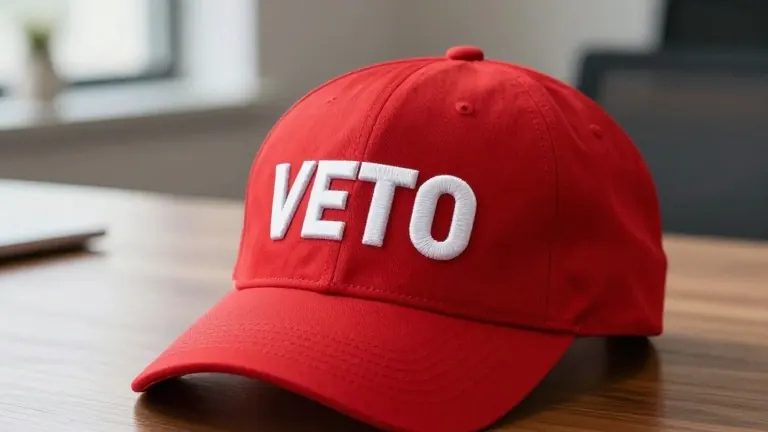
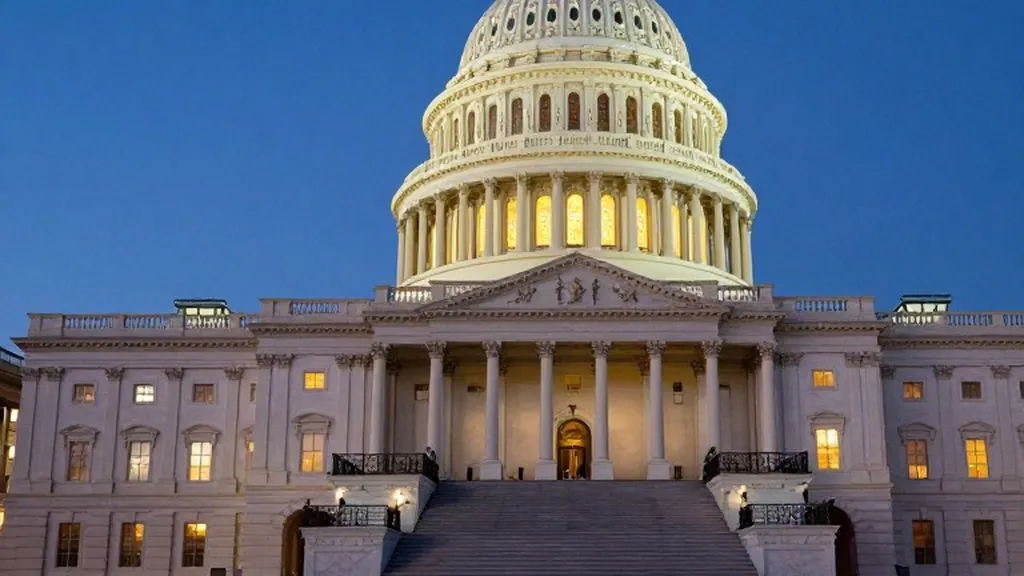
A red MAGA hat bearing the single word VETO served as the primary visual cue for President Donald Trump’s strategy following the midterm elections. The image, which he shared on Truth Social, replaced his usual slogan and signaled his intent to use the presidential power to block legislation as Democrats secured majorities in both houses of the US Congress. The election results, held on Tuesday, saw the party flip several long-held Republican seats, fundamentally shifting the balance of power in Washington.
In a post-election interview with The New York Times, Trump said he was absolutely willing to accept the results and work with the new Democratic majority. However, he simultaneously posted the veto-themed image, creating a mixed message of cooperation and confrontation. He attributed the Republican loss to the fact that he was not personally on the ballot, claiming in online posts that Republicans would have won in a landslide if he had been running for office.
Political observers have begun referring to the president as a lame duck, a term that traditionally describes the final period of a term when an official has less influence. The concept has expanded to include situations where a politician’s scheduled departure reduces their ability to influence policymaking well before they leave office. With two years remaining until his exit in January 2029, Trump’s direct influence over the legislative agenda is expected to diminish as the midterm losses are widely interpreted as a repudiation of his administration.
Despite the shifted congressional dynamics, the president retains strong executive powers. Trump has previously used executive orders to bypass legislative gridlock, centralizing authority in the White House. In January 2025, he declared a national emergency to divert billions of dollars toward border wall construction after Congress allocated less funding than requested. While Congress can enact a joint resolution to terminate such a declaration, the president can use a veto to block it, a power that is difficult to overcome without a two-thirds majority in both chambers.
Trump has indicated he will use this veto power frequently, telling Fox News that he would veto all insane legislation from Democrats until they came back to the table to work together. James Boys, a research fellow at the Centre on US Politics at UCL, noted that many issues remain beyond the reach of Congress despite the damaging results for the Republican Party. He anticipates that Trump will focus on foreign affairs, where the US Constitution grants wide-ranging powers, as his primary area of activity.
Historical precedents suggest that lame duck presidents often focus on areas where the executive branch has broad autonomous powers. Former President Barack Obama used his executive authority to finalize the Iran Nuclear Deal and normalize diplomatic relations with Cuba after losing congressional control in 2014. Former President Bill Clinton focused on foreign policy in his last months, hosting the Camp David Summit in 2000 to broker peace between Israelis and Palestinians. More recently, former President Joe Biden entered a similar period after announcing he would not run for re-election in 2024, issuing sweeping federal pardons for his son, Hunter Biden, and directing the Department of Defense to distribute the remainder of a $61 billion aid package to Ukraine.
More Politics · World news · Report a business · Got a Story?