Democrats Win Congress and Texas House in Sweeping Midterm Shift
The party gained 30 House seats and 7 Senate seats, while also taking control of the Texas state legislature and governor's office for the first time in decades.
By Nadia Singh ·
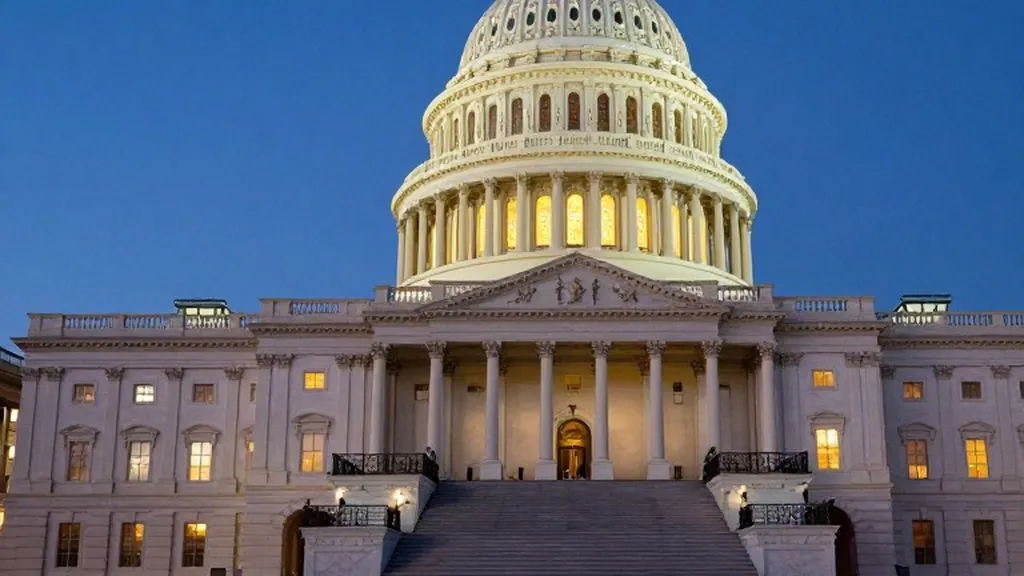
Voters in the United States delivered a decisive shift in power on Tuesday, November 3, 2026, as Democrats secured control of both chambers of Congress and expanded their reach in state governments nationwide. The Associated Press and Ballotpedia reported that Democrats won 233 of the 435 U.S. House seats and 20 of the 35 U.S. Senate seats that were up for election. This result ended the Republican hold on the House and reversed their majority in the Senate, creating a unified Democratic Congress for the first time in two years.
The scale of the change was described by election officials as the largest single-election shift in state government power since 2010. Katie Owens Hubler, director of elections and redistricting at the National Conference of State Legislatures, noted the magnitude of the turnover. Democrats gained control of the state House in Texas, a chamber that has been under Republican control since 2002. They also elected Gina Hinojosa as the state's first Democratic governor since 1994. This trifecta of power in Texas marks a historic departure from the state's long-standing alignment with the Republican Party.
Beyond Texas, Democrats achieved full control of state governments in at least five other states where they previously shared power. In Michigan, Minnesota, Pennsylvania, Nevada, and Wisconsin, the party won or retained both legislative chambers and the governor's office. Devin Remiker, chairman of Wisconsin's Democratic Party, said the state had broken a 16-year Republican majority in its legislature. He emphasized that the party must now deliver on promises to voters who are concerned about the cost of living and economic stability.
President Donald Trump reacted to the results by focusing on infrastructure projects rather than the political fallout. On Wednesday, he invited reporters to the White House ballroom construction site, where he spoke for nearly 20 minutes about the building's beams and design. He did not mention the Republican losses in his initial remarks. When asked about the election, he stated that he was not on the ballot and suggested that voters did not like the specific candidates who ran. He also claimed that if he had been running, the party would have won in a landslide.
Republican leadership faced immediate challenges in maintaining its narrative. House Speaker Mike Johnson reportedly will not seek reelection as the party's leader following the loss. In the Senate, Vice President JD Vance publicly distanced himself from the war in Iran, a key issue for many voters. The AP Voter Poll indicated that about six in 10 voters disapproved of how Trump was handling the presidency, and many cited the war and high fuel prices as reasons for their vote. Trump acknowledged the war's impact but said it had been worth the cost.
The economic performance of the country played a central role in the outcome. The AP Voter Poll found that three-quarters of voters described the economy as not so good or poor. About eight in 10 reported that inflation had caused moderate to severe financial hardship. Democrats campaigned on issues such as lowering gas prices, reducing grocery costs, and expanding healthcare access. House Democratic Leader Hakeem Jeffries, who is expected to become the next Speaker of the House, promised a 100-day agenda focused on these kitchen-table issues.
Redistricting efforts by Republicans in several states did not prevent the Democratic surge. In Texas, Florida, and Alabama, new district maps that favored Republicans failed to deliver the expected gains. In some cases, the redistricting process angered voters and mobilized Democratic turnout. For example, in the Rio Grande Valley of Texas, new districts led to the defeat of incumbent Republican Monica De La Cruz, while Democratic challengers won seats in areas that had previously leaned Republican. Mark Jones, a political science professor at Rice University, noted that the party had made unrealistic assumptions about the continued shift in Latino voting patterns.
International reactions to the U.S. election results have already begun to shape global policy discussions. British Prime Minister Andy Burnham expressed hope that the new Congress would focus on ending the war in Iran, which has driven up fuel prices. Ukrainian President Volodymyr Zelenskiy said he hoped the Democratic gains would lead to increased support for Ukraine in its conflict with Russia. These international responses highlight the potential impact of the new Congress on foreign policy and energy markets in the coming years.
Democrats now face the challenge of governing with a mandate for change while navigating a divided executive branch. They plan to launch oversight investigations and consider impeachment options for the president or cabinet members. Rep. Robert Garcia of California, who leads the House Oversight Committee, issued a brief warning to the administration: Lawyer up. Meanwhile, newly elected governors in states like Minnesota and Wisconsin have expressed a desire to work across the aisle. Amy Klobuchar, the governor-elect of Minnesota, told supporters that she wanted to move the state forward rather than to the left or right.
The next Congress will convene on January 3, 2027, with a clear Democratic majority in both chambers. This new alignment provides the party with the power to pass legislation, confirm judicial nominees, and conduct investigations with fewer obstacles than in the previous two years. The results signal a significant reset in American politics, driven by voter dissatisfaction with economic conditions and the conduct of the war in Iran. As the new term begins, the focus will shift from campaigning to the practical work of implementing the policy changes that voters demanded.
The election also saw changes in other state offices, including attorney generals and secretaries of state. Ballotpedia data shows that Democrats gained three attorney general seats and five secretary of state seats. In the state supreme courts, the partisan control remained largely unchanged, with no net shift in seats. These local and state-level results complement the federal victories, creating a broader landscape of Democratic influence across the government. The coming year will test the ability of the party to translate this electoral momentum into tangible legislative achievements.