Quarter-Century Later, iPod Still Resonates
Apple’s original pocket music player marked a pivotal shift in consumer electronics 25 years ago with its compact 5GB drive.
By Nadia Singh ·
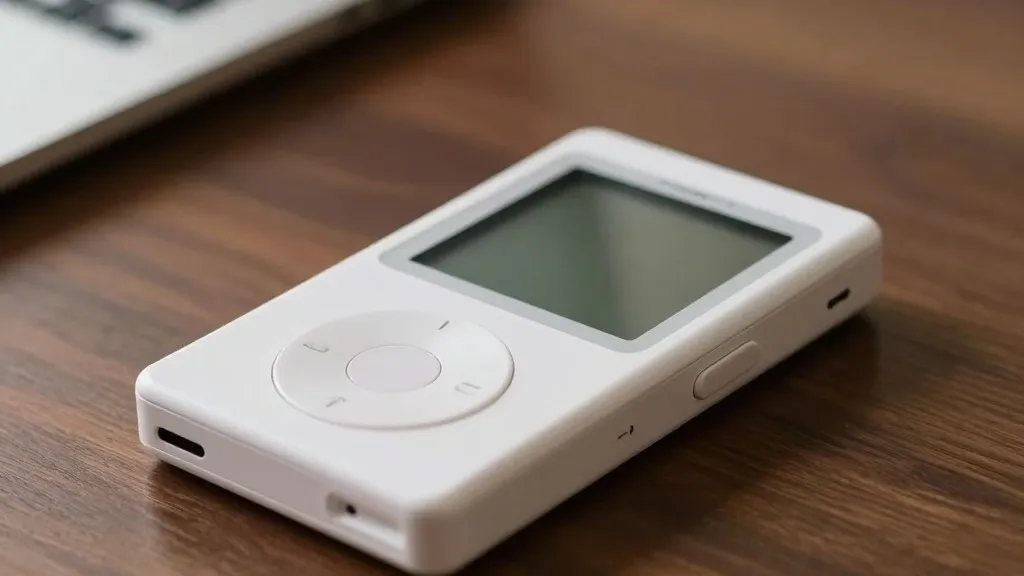
A quarter-century has passed since a sleek white device redefined how the world listened to music.
On this day in 2001, Apple CEO Steve Jobs took the stage to introduce a product he initially described as a breakthrough digital device that was not a Mac. The reveal marked the official debut of the first-generation iPod, a gadget that would quickly become the ultimate carry-along item for tech enthusiasts before the smartphone era rendered dedicated players obsolete. The core promise of the device was simple yet revolutionary: it could hold a user's entire music collection in their pocket for a price tag of $399.
At the time of the launch, Apple had successfully navigated the company out of a difficult period following the dot-com bubble burst. The firm had established itself firmly in the Mac OS X era, with products like iBooks and iMacs gaining significant consumer traction. Jobs had previously predicted that the Mac could serve as the central hub for a digital lifestyle, connecting cameras, camcorders, and DVD players. He identified portable music as the next logical step, reasoning that while everyone loves music, the market lacked a definitive leader despite the presence of established competitors.
Jobs acknowledged that companies like Sony, Creative, and Sonic Blue already offered portable digital music players. However, he argued that none of them had yet found the correct recipe for the format. The market at the time was divided among CD players, MP3 CD players, flash players, and hard disk-based jukebox players. Apple chose the hard disk approach as its entry point, aiming to deliver superior capacity and performance in a manageable form factor.
The device was introduced as an MP3 music player capable of CD-quality sound and compatible with MP3, WAV, and AIFF formats. Its 5GB storage capacity was the headline feature, allowing it to hold approximately 1,000 songs. Specifically, this capacity equated to 1,000 typical pop songs encoded at 160Kbps, a figure Jobs described as representing the entire music library for most users. This storage capability was made possible by Toshiba’s ultra-compact 1.8-inch hard drive, which was just 0.2 inches thick, enabling the iPod to maintain dimensions comparable to a deck of cards at 2.4 by 4 by 0.78 inches. Weighing only 6.5 ounces, the device was lighter than most cell phones of that era.
Beyond raw storage, the iPod offered advanced functionality including 20-minute skip protection and rapid file transfer speeds. It featured a single FireWire 400 cable for both charging and data transmission, a connection Jobs touted as the first and only music player to utilize it. The speed advantage was significant; transferring an entire CD of music took just five to 10 seconds via FireWire, whereas USB connections of the same period required about five minutes for the same task. Filling the device with 1,000 songs took an estimated 10 minutes compared to five hours on a USB-based competitor. The unit also included a rechargeable lithium-polymer battery that provided 10 hours of continuous playback and could recharge to 80% in one hour.
The design focused on minimalism and durability, with Jobs highlighting the device's "amazing Apple design" and legendary ease of use. The interface featured a single-hand-friendly scroll wheel with a piezoelectric clicker for tactile feedback, allowing users to quickly locate tracks by playlist, artist, or song. During the presentation, the first song demoed on stage was "Building a Mystery" by Sarah MacLachlan. The third major innovation was Auto-Sync with iTunes, which launched simultaneously as version 2. This feature ensured that libraries curated on a Mac remained synchronized with the pocket player during charging or data transfers, while the iPod also functioned as a FireWire hard disk drive.
The first iPhone did not arrive until early 2007, more than five years after the iPod's debut. The two devices coexisted in Apple's product lineup for over a decade, though the iPod's prominence gradually diminished. The final model, the 7th-generation iPod Touch, was released in May 2019. Although the product line was left unmaintained after that release, it was not officially discontinued until May 2022, closing a chapter that began 25 years ago with a simple card-sized device that changed personal media consumption forever.