Great Salt Lake needs 40% water cut to survive by 2034
Ben Abbott of BYU says the lake is 30% full and argues that a 40% reduction in usage is the only path to restoring it before the Winter Olympics.
By Julia Novak ·
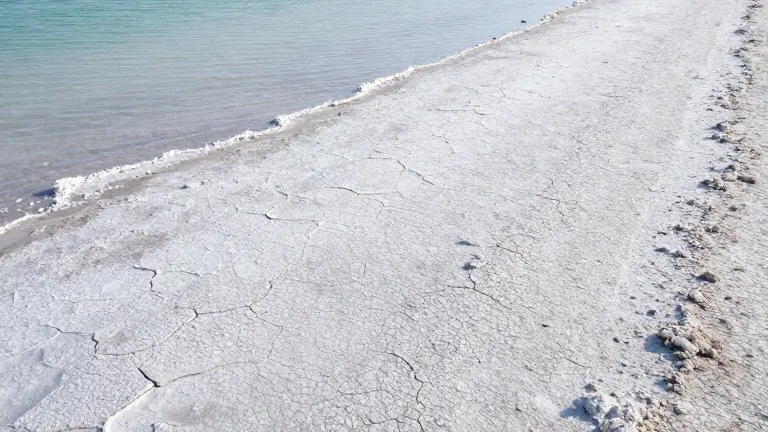
Utah residents face a steep requirement to keep the Great Salt Lake alive. Ben Abbott, an ecology professor at Brigham Young University and executive director of Grow the Flow, states that the state must reduce water usage by 40 percent to bring the lake back to healthy levels. He argues that this reduction is necessary to prevent the lake from drying up entirely, a scenario he believes would trigger dust storms, higher temperatures, and the loss of the brine shrimp industry. That industry currently produces half of the world's supply of table shrimp.
The urgency stems from the lake's current condition. It is 30 percent full and sits 15 feet below its optimal height. Abbott points to the fate of Lake Urmia in Iran as a warning. That lake, once the largest in the Middle East, dried up in 12 years after the government diverted rivers. The disappearance caused regional climate shifts, dry wells, and toxic dust that led to clusters of cancer and heart disease. Abbott uses this example to counter arguments that losing a salty lake is a minor issue.
Abbott has become a central figure in the effort to save the lake. He serves on the board of Great Salt Lake Rising and is a father of four. He teaches 150 students a day and has agreed to participate in panel discussions at nearby universities. He says he stays busy because he is a scientist who understands the consequences of losing the lake. He also cites a divine responsibility to care for the environment as a motivation for his relentless outreach to politicians, philanthropists, and grassroots groups.
Political and financial support is building around this goal. State politicians have set a target to restore the lake to healthy levels by the 2034 Winter Olympics. The federal government has committed at least $1 billion to the effort. Philanthropists including the Marriott, Eccles, Miller, and Romney families are contributing millions. Local farmers, homeowners, and municipalities are showing interest in conservation programs that offer compensation for reduced water use.
Abbott cites a Harvard study indicating that Utah has the highest levels of societal trust of any state in the country. He argues this social capital is as important as financial resources. He says the state has the ingredients to become the first community to successfully restore a saline lake. He frames this effort as a chance to demonstrate to the world that Utah can solve complex environmental problems.
The next step involves implementing the 40 percent reduction in water usage. This will require coordinated action from all sectors. The goal is to reach the target before the 2034 Winter Olympics. Abbott says the state has the resources and the will to pull off this rescue. He believes this will be a defining story for the region's future.