Florida ballot measure faces $12 billion revenue cut
Voters decide whether to expand property tax exemptions by $200,000, a change that would reduce local government funding significantly over the next two years.
By Jessica Abebe ·
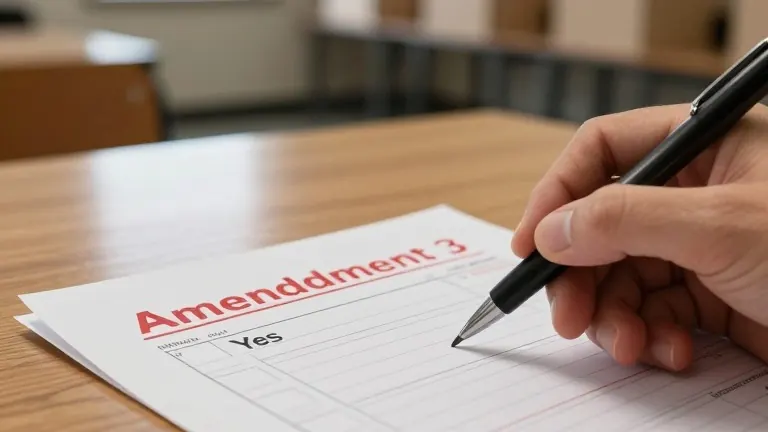
Florida residents vote on October 30 on Amendment 3, a proposal that would increase the homestead property tax exemption from $50,000 to $250,000. This change would remove nearly $12 billion from local government budgets on a recurring basis, according to the state's Office of Economic and Demographic Research. For homeowners who qualify, the measure could eliminate most non-school property taxes on their primary residence. In Jacksonville, the Florida Policy Institute estimates the city could lose up to $372 million over the next five years.
The amendment requires a supermajority of 60% to pass. If approved, local governments would face immediate budget shortfalls. State property tax revenue has grown from approximately $32 billion in 2019 to nearly $60 billion in the most recent fiscal year, driven by a post-pandemic housing boom and out-of-state migration. Supporters argue that local governments have accumulated excess revenue and that the cut will provide direct relief to families facing high costs for groceries, fuel, and utilities.
Margy Grant, CEO of Florida Realtors, stated that homeowners have funded record revenue growth for local governments. Her organization has spent $19.5 million on the 'Vote Yes on 3' campaign as of the end of October. Grant said the measure ensures residents can remain in their homes despite rising costs. Governor Ron DeSantis also supports the amendment, aligning with the view that property taxes have grown out of control.
Opponents warn that the revenue loss will force cuts to essential public services. Mike Weinstein, Jacksonville's chief administrative officer and a Republican, noted that half of the city's $2 billion budget comes from property taxes. He said funds for mosquito control, road surfacing, libraries, and parks would be affected. Weinstein argued that the amendment was introduced quickly without full consideration of unintended consequences. He predicted the city might need to expand its complaints department to manage increased citizen frustration over reduced services.
Steven Johnson, an organizer with the nonprofit Florida Rising, posed the question of affordability for whom. He noted that while homeowners may see savings, renters and business owners could face indirect costs. Johnson's group conducted voter outreach campaigns in the weeks leading up to Election Day. Volunteers made nearly 1,500 calls in a single evening to encourage voters to support a 'no' vote. Rachel Dues, a 54-year-old disabled veteran and notary, participated in these phone banks while managing her own financial constraints, including rising rent and gas prices.
Dues, who relies on food pantries and utility assistance, expressed concern that these safety net programs would be cut. She described the measure as a potential bait-and-switch, offering short-term relief to some at the expense of long-term community support. Maggie Fernandez, a 68-year-old homeowner and retiree's spouse, also campaigned against the measure despite qualifying for the exemption. She said she felt the cut would hurt neighbors who are worse off financially. Fernandez made 111 phone calls in one night to urge others to vote no.
The Florida Sheriffs Association warned that law enforcement and emergency medical services would suffer from the revenue decline. Proponents countered that these warnings were overblown and that local governments would find ways to eliminate waste. Senator Rick Scott, a Republican supporter, posted on X that every county has waste to cut. Local leaders maintain that services beyond police and fire, such as public transportation and homelessness prevention, are likely to see deeper reductions. The amendment limits the benefit to homeowners based on purchase dates, excluding many residents from the full exemption.
Eleven states have reined in property taxes in 2026 according to the Center on Budget and Policy Priorities. Florida's proposal is more expansive than measures in those states. The outcome of the vote will determine the financial trajectory of local governments across the state. If Amendment 3 passes, local budgets will shrink by the estimated $12 billion, requiring immediate adjustments to spending priorities and service levels.